


Normal initial bonding
Cartons appear properly sealed right after production, with no obvious issues in the short term.
Case Details
Laminated glossy cartons bonded normally at first on high-speed packaging lines, but bottom cartons burst open after long-term heavy stacking. We re-engineered the adhesive around laminated substrate wetting, fast setting, load-bearing strength and layer flexibility to create a fast-set laminated packaging adhesive better suited for beverage carton packaging.
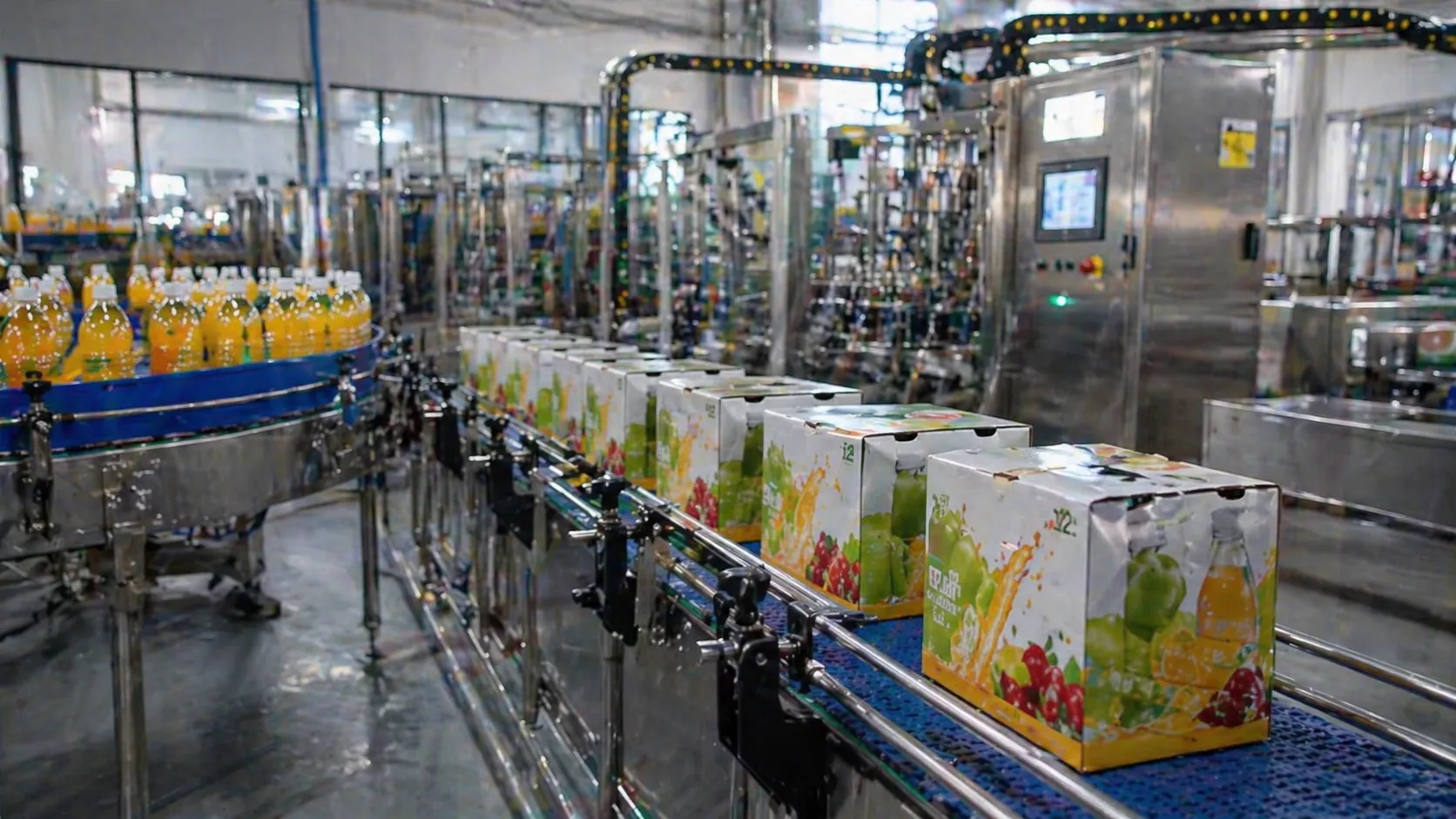
Application Site
Laminated Beverage Carton Sealing & Heavy-Duty Stacking
Application
High-Speed Beverage Carton Sealing
Substrate
Laminated Gloss Corrugated Carton
Customer Problem
Bottom carton opening and edge debonding after long-term stacking
Solution Adhesive
Fast-Set Laminated Packaging Hot Melt Adhesive
Project Background
The client is a beverage packaging supplier in South China, providing outer cartons for bottled drinks, functional beverages and tea brands. The original hot melt adhesive performed normally during early production, but after filling, stacking, warehousing and long-term placement, some bottom cartons showed seal bursting and edge debonding.
Cartons appear properly sealed right after production, with no obvious issues in the short term.
Beverage cartons are heavy. After prolonged stacking, bottom cartons stay under constant pressure, and seals gradually debond.
Problem Diagnosis
After observing sample cartons and discussing line conditions, we concluded the problem isn't simply "adhesive not sticky enough" — it's a matching issue caused by the laminated substrate, fast packaging pace and heavy stacking working together.

Laminated glossy carton surfaces are smoother, requiring better adhesive spreading and interfacial anchoring capability.

After application, cartons quickly enter pressing, conveying and palletizing stages, so the adhesive must rapidly develop initial holding strength.

If the adhesive layer hasn't fully set before the next step, long-term bond strength will be compromised.

Bottom cartons bear constant pressure, so the adhesive layer needs better tensile strength, cohesion and creep resistance.
Core Judgment
Core Conflict 1
High-speed lines need quick adhesive setting to prevent carton shifting during conveying and stacking; but laminated surfaces need enough time for the adhesive to spread and wet. Pushing only for fast dry risks surface weakness; pushing only for wetting slows the line.
Core Conflict 2
Long-term heavy stacking requires high cohesive strength and tensile capability; but an overly hard adhesive layer becomes prone to brittle cracking and delamination under carton deformation, transport vibration or stacking pressure. The adhesive must both bear load and accommodate some deformation.
Solution Development Process
During the experimental phase, rather than simply giving the client a "harder" or "faster-drying" adhesive, we designed three rounds of formulation comparisons.
Screen different resin systems for wetting and initial tack on laminated cartons, judging whether the adhesive can spread quickly and form effective anchoring on glossy surfaces.
Adjust polymer and wax balance to harmonize setting speed, layer flexibility and tensile strength, avoiding only fast-dry-but-weak or only flexible-but-weak-load.
Run trials matching the client line speed and pressing window, observing glue line condition, carton sealing strength and high-temperature stacking retention.
Final Solution
This adhesive isn't simply about fast setting — it builds initial holding strength in a short time while retaining wetting and anchoring ability on laminated glossy surfaces. After cooling, the adhesive layer has better cohesive strength and tensile performance, with a certain degree of flexibility retained.
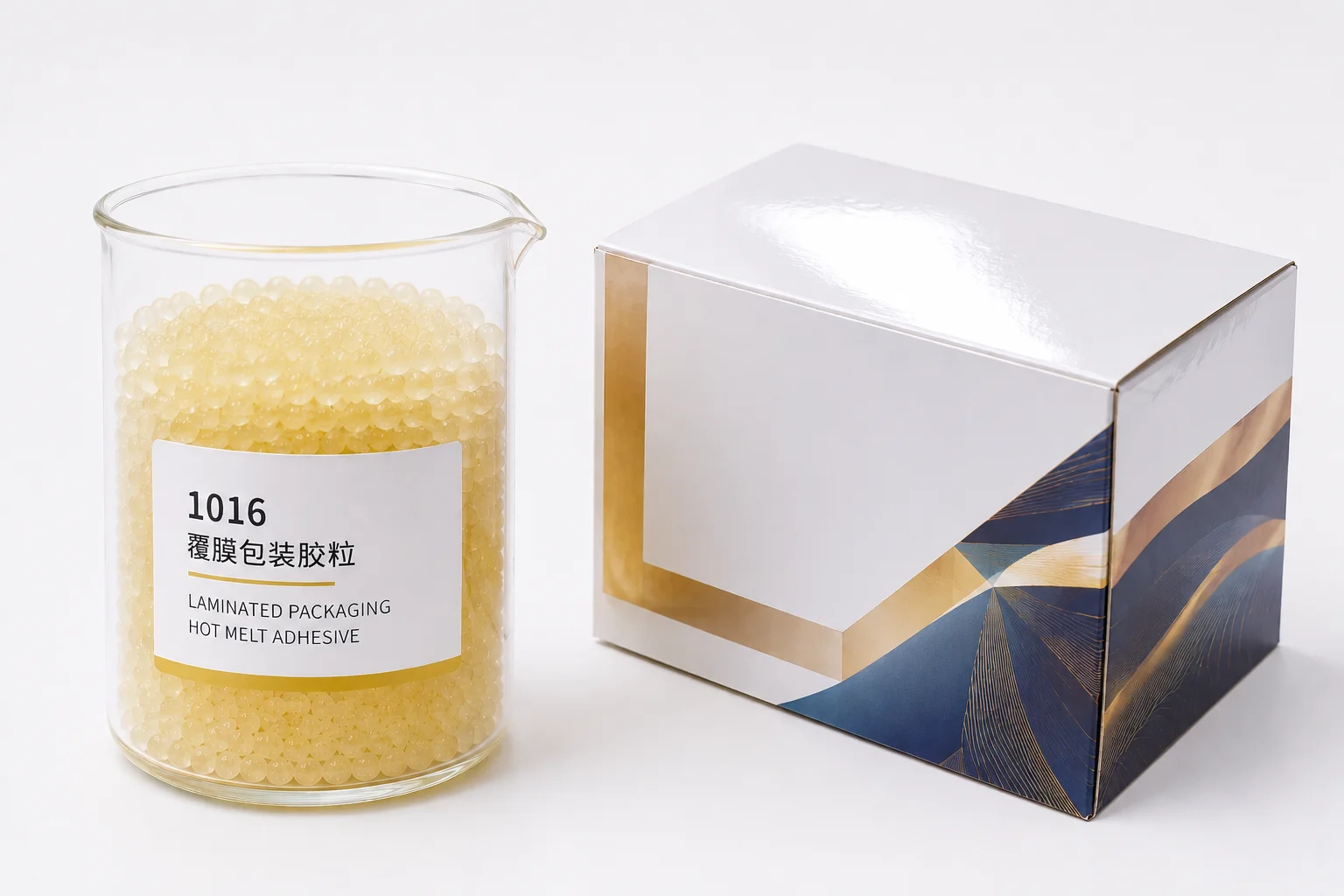
Recommended Adhesive

Matches high-speed packaging line pace, shortening initial setting time.

Improved adhesive spreading and anchoring on glossy laminated carton surfaces.

Enhanced glue layer cohesion, improving carton sealing load-bearing stability.

Reduced brittle cracking and delamination risk from overly hard glue layers.
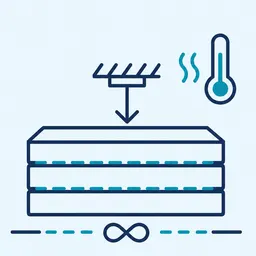
Improved bond retention under long-term stacking and high-temperature warehousing.

Adapts to continuous application, fast pressing and downstream palletizing rhythm, reducing glue line tailing and shifting.
Improvement Results
Reduced glue line breakage and displacement, improving carton sealing pass rate.
Maintains positioning within the pressing window, reducing carton shifting during conveying.
Better creep resistance reduces bottom opening and edge debonding under long-term stacking.
Stable glue properties and batch consistency reduce the need for frequent temperature and pressure adjustments.
The key takeaway from this case is not about simply making the adhesive harder or stickier, but about truly matching the adhesive type to the client's carton substrate, packaging speed and post-production load environment.
For heavy-load packaging scenarios like beverage cartons, hot melt adhesive must not only set quickly on high-speed production lines, but also have sufficient wetting ability on laminated glossy surfaces, and maintain strength and flexibility during long-term stacking and transport. Only by considering the substrate, equipment pace and post-production stress conditions together can a more stable mass-production adhesive solution be formed.
Project Inquiry
If your laminated cartons show weak bonding, bursting or edge debonding after high-speed sealing, long-term stacking or transport, send us your carton substrate, line speed, gluing method and debonding location. We'll assess whether the adhesive type, application temperature, glue line width or pressing window needs adjustment based on your site conditions.