


Why Laminated Cartons Are Difficult to Bond
Film type, surface treatment, print coating and contamination can reduce wetting. A grade should be chosen from trials on the production laminate, not from the carton name alone.
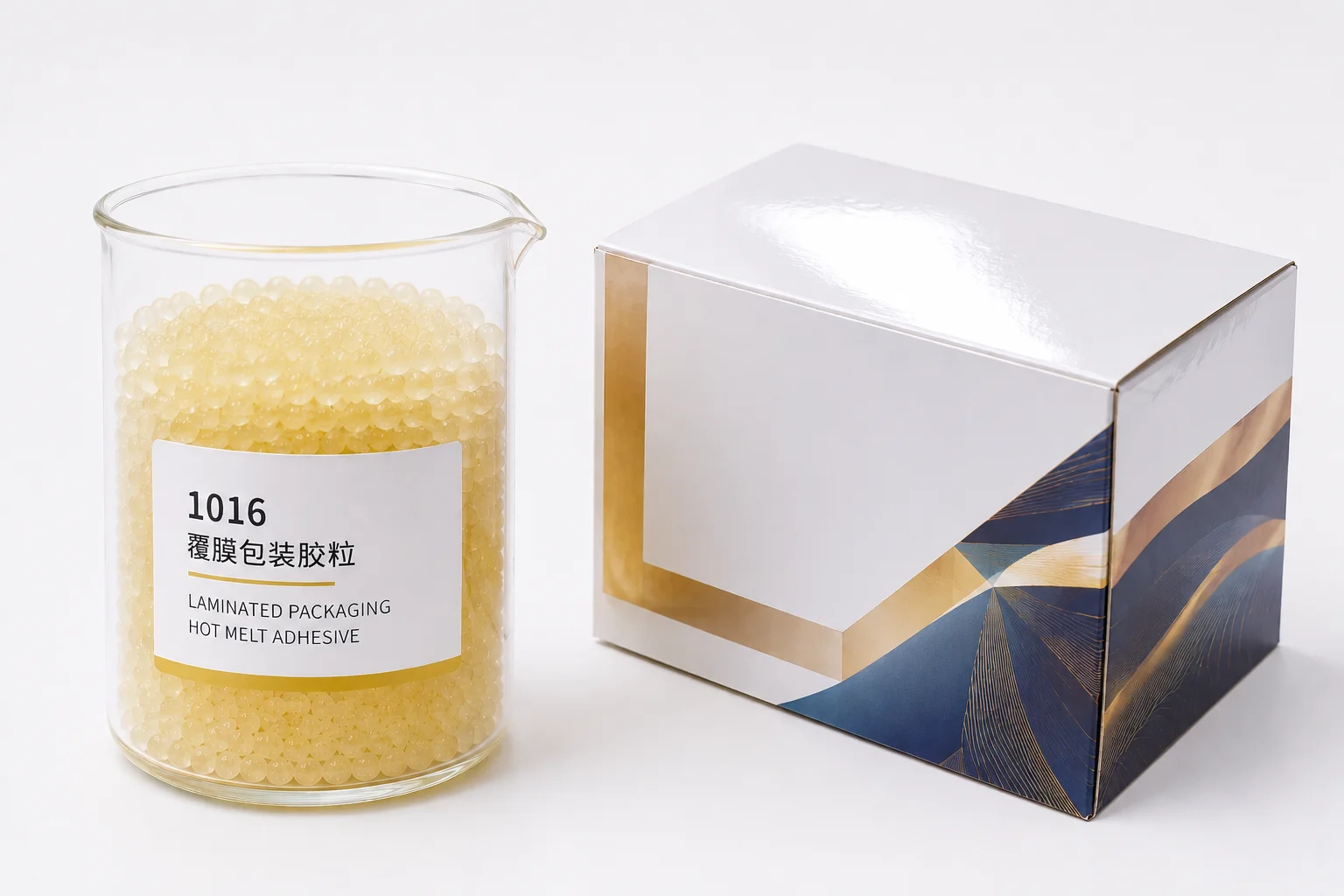
GRADE 1016
1016 is designed for laminated cartons, color boxes and beverage packaging where film wetting, fast setting and stable bonding must be balanced on automated lines.
Application temperature
160-180°C
Viscosity
1,500±500 cps @180°C
Softening point
85±5°C
Color
Light yellow
Film type, surface treatment, print coating and contamination can reduce wetting. A grade should be chosen from trials on the production laminate, not from the carton name alone.
Use the published 160-180°C range as the evaluation window and adjust only after checking melt flow, wetting, stringing and thermal aging in the equipment.
Compare bond coverage and failure mode on each incoming laminate batch. Good results should show stable contact across the glue line instead of isolated surface grab.
Line speed, compression pressure and dwell time must allow the adhesive to wet the film before it sets. Too little compression or delayed contact can look like an adhesive-strength problem.
Evaluate sealed cartons under the expected warehouse, stacking and transport conditions. Softening point is useful, but loaded bond testing is the more relevant production check.
Run 1016 alongside the current adhesive using the same carton, glue amount and line settings, then compare opening, fiber tear, heat holding and equipment cleanliness.
No single grade can be assumed to fit every film and coating. Sample testing with the actual carton and line settings is required.
Film structure, tank and nozzle temperature, line speed, glue amount, compression time and the observed failure mode are the best starting details.
Send the substrate, equipment and production conditions so the sample can be evaluated against your actual process.